Not all cable ties are suitable for outdoor use. A cheap tie that holds wires perfectly in a dry garage turns brittle and snaps within months in sun and frost. This article explains what makes outdoor-grade ties different and what to look for when buying.
Why does an ordinary tie fall apart outdoors?
Plastic has three main enemies outdoors:
- UV radiation. Ultraviolet light breaks down polymer chains: the tie first loses elasticity, then becomes brittle and snaps even under a small load.
- Temperature swings. Over a year a tie endures anything from −25 °C in winter to +60 °C on a sun-heated surface in summer. Low-grade plastic cracks from cyclic expansion and contraction.
- Moisture. Polyamide naturally absorbs moisture — this is normal and even helps elasticity — but poor-quality recycled plastic degrades much faster under moisture-frost cycles.
What makes a tie UV-resistant?
UV resistance comes down to two things: material and colour. Quality outdoor ties are made of virgin polyamide PA66 with added UV stabilisers — usually carbon black, which absorbs ultraviolet light and protects the polymer. That is why almost all UV-resistant ties are black.
White or coloured ties without stabilisers are meant for indoor work only. If a seller specifies neither UV resistance nor operating temperature — assume the tie is not fit for outdoors.
Kraften ties in outdoor conditions
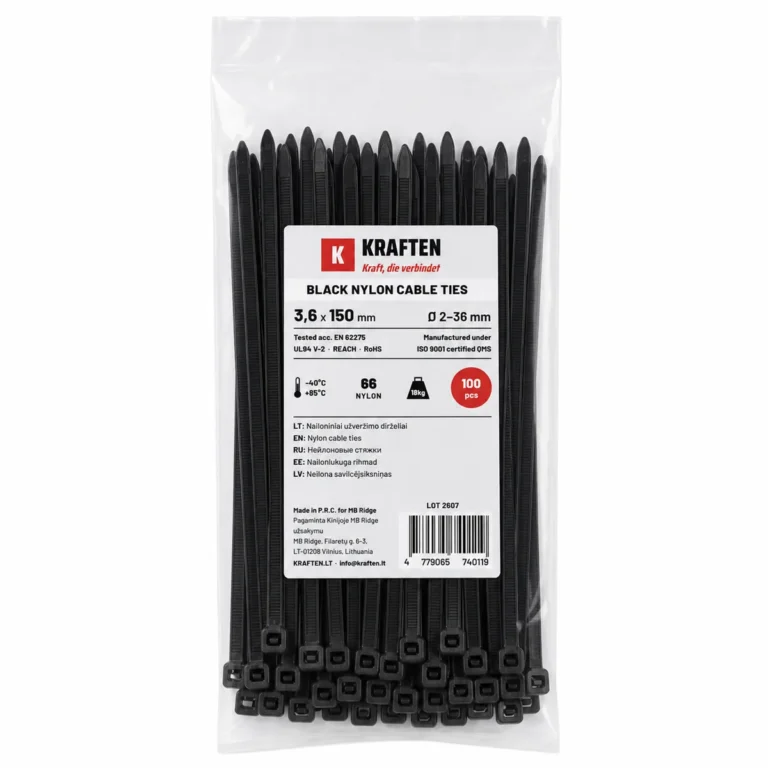
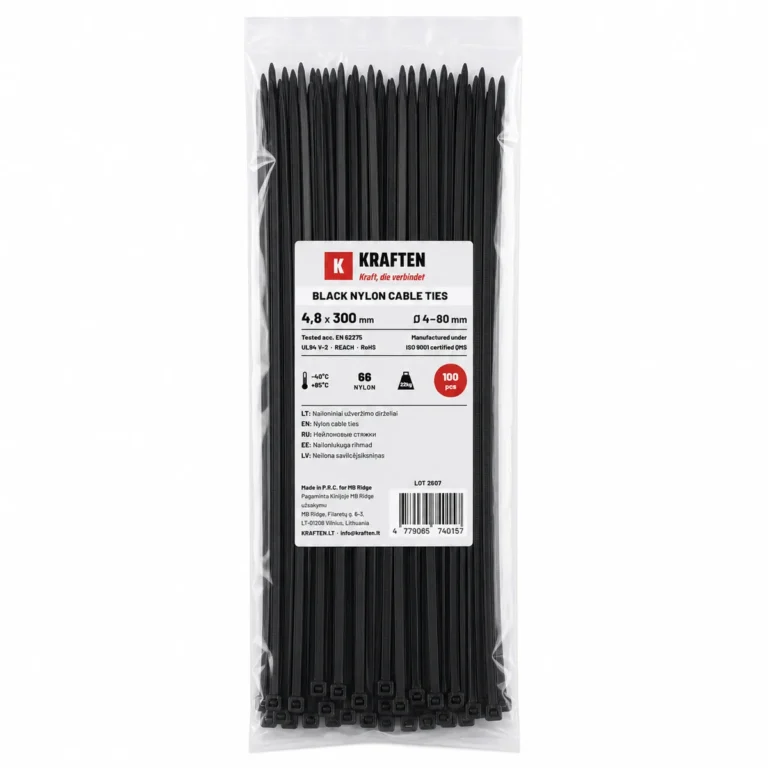
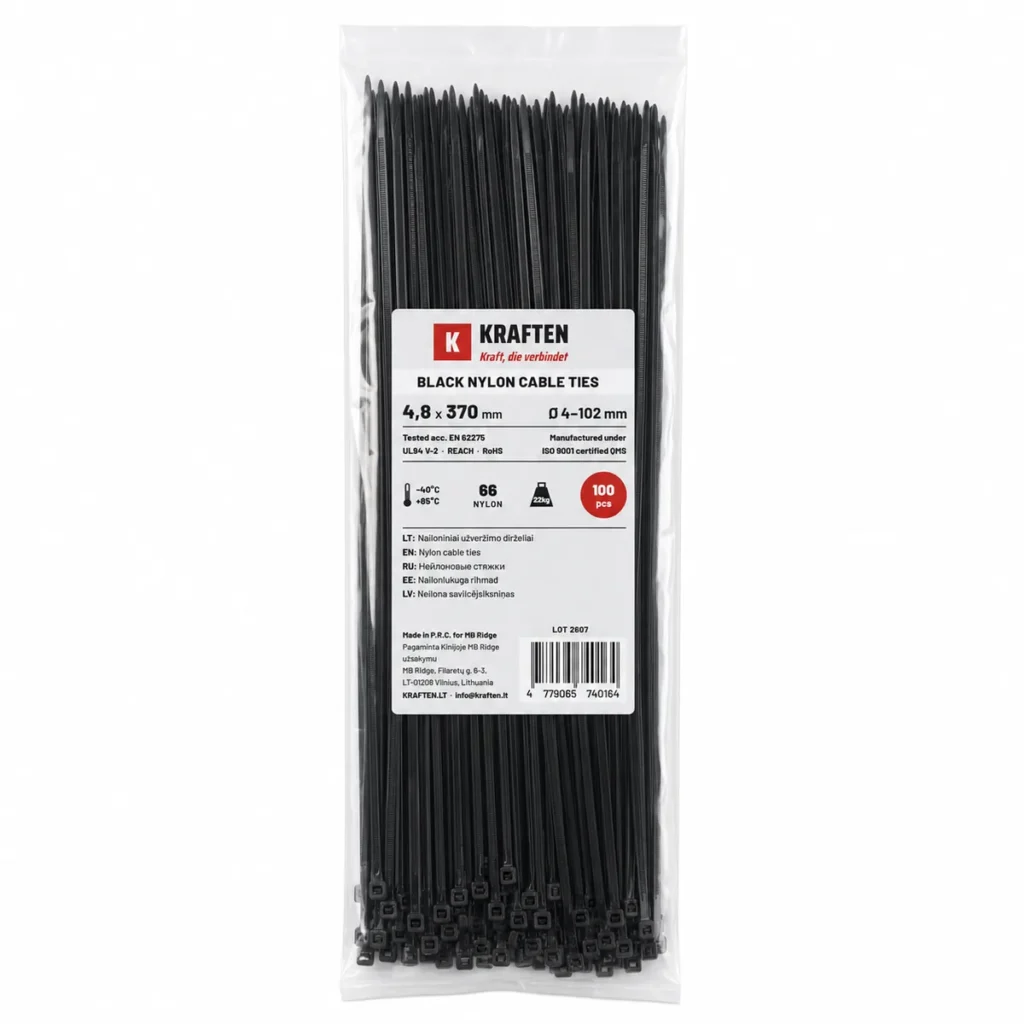
Black Kraften Premium cable ties are made of virgin PA66 with UV stabilisers and keep their properties from −40 °C to +85 °C. In practice this means they suit:
- Solar power plants — fastening cables to mounting structures and under modules, where ties are heated and sunlit daily;
- Outdoor lighting and CCTV — fixing cables to poles and façades;
- Fences — attaching panels, mesh and privacy strips;
- Agricultural machinery — securing hoses and wiring where vibration adds stress;
- Boats, trailers, canopies — permanent exposure to rain and sun.
Practical outdoor installation tips
Don’t install in freezing cold. Below −10 °C polyamide stiffens — if possible keep ties warm and install them right after taking them out. An installed tie withstands frost without issues — only the tightening moment is sensitive.
Don’t overtighten. Leave minimal slack — cables and structures move as temperatures change.
Choose wider ties for vibrating spots. Vibration wears the locking mechanism, so for machinery pick 4.8–7.6 mm width (up to 22–45 kg).
Cut flush. Trim the excess flush with the head — a sharp edge outdoors often causes scratches and injuries.
Conclusion
For outdoor work choose only black ties made of virgin PA66 with UV stabilisers and a clearly stated operating temperature. Kraften Premium ties (8 sizes, 100–370 mm, holding 8–45 kg) meet all these criteria. Orders before 14:00 ship the same day, delivery within 1–2 business days across Lithuania.